How To Keep a Mattress Topper From Sliding: Simple Fixes That Work
If you’re searching for “How To Keep a Mattress Topper From Sliding,” you’re likely tired of waking up to find your topper bunched up, hanging off the edge, or halfway across the bed. This guide walks through why toppers slide, how to stop it, and what to look for when buying so the problem doesn’t keep coming back.
Why Do Mattress Toppers Slide in the First Place?
Before looking at solutions, it helps to understand the causes. A mattress topper usually slides because of:
- Smooth or slippery mattress fabrics (like some knit or slick covers)
- No friction between the topper and mattress (especially with foam-on-foam)
- Wrong size topper for the mattress (too small or too big)
- Active sleepers who move a lot during the night
- Low-friction sheets that can pull on the topper when you turn
Knowing the reason makes it easier to choose the most effective way to keep your mattress topper in place.
How To Keep a Mattress Topper From Sliding: Most Effective Methods
1. Use a Fitted Sheet to Hold Everything Together
One of the simplest ways to keep a mattress topper from sliding is to use a deep-pocket fitted sheet that goes over both the topper and the mattress.
- Choose a fitted sheet with pockets deep enough to cover the combined height.
- Make sure the elastic grips snugly under the corners.
This method works best when the topper is the same size as the mattress.
2. Try a Non-Slip Mat or Rug Pad
Placing a non-slip mat between the mattress and topper can add friction and stop movement.
- Look for a thin, grippy pad similar to a rug pad.
- Cut it to size so it doesn’t hang over the edge.
- Lay it flat directly on the mattress, then place the topper on top.
This is especially useful for foam toppers on smooth mattress covers.
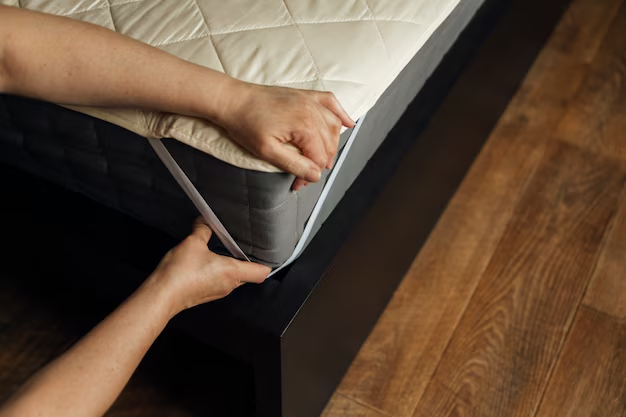
3. Use Mattress Straps or Sheet Suspenders
Elastic straps or suspenders can help keep your topper from sliding by securing everything from below.
- Straps usually wrap around the mattress and topper together.
- Corner suspenders clip to the sheet and hold the topper in place from underneath.
These can be a good option if you don’t want anything between the mattress and topper.
4. Check the Size and Fit of Your Topper
A common cause of sliding is a topper that doesn’t match the mattress size.
- A too-small topper tends to shift toward the center or one side.
- A too-large topper can buckle or hang off the edges and move more easily.
If you’re still deciding what to buy, look for a topper that matches both the mattress size and edge shape as closely as possible.
5. Use a Mattress Encasement or Zippered Protector
A zippered mattress encasement or protector can fully surround the mattress and topper together, reducing movement.
- Place the topper on the mattress.
- Encase both inside a protector designed to fit the total height.
- Zip it fully so the topper can’t slide out of place.
This also adds a layer of protection against spills and dirt, but make sure the fabric isn’t too slick.
6. Increase Friction With a Textured Surface
For some sleepers, small changes in texture can help keep a mattress topper from sliding:
- Flip the topper if one side has more grip or texture.
- Use a quilted mattress pad over the topper under the fitted sheet for extra friction.
This alone may not solve severe sliding but can help when combined with other methods.
Common Questions About Keeping a Mattress Topper in Place
How tight should the fitted sheet be?
A fitted sheet works best when it is snug but not overstretched. If it pops off the corners easily, it may not hold the topper securely. Deep-pocket sheets that are slightly smaller than the combined height often work better than overly loose ones.
Can I use tape or adhesives to stop a topper from sliding?
Some people wonder about using double-sided tape or adhesive strips. These can sometimes:
- Leave residue on the mattress or topper
- Affect the fabric or foam over time
- Be difficult to reposition
Because of this, many sleepers prefer non-adhesive options like non-slip mats, straps, or fitted sheets.
Does the material of the topper matter?
Yes. Certain materials tend to slide more:
- Smooth gel or memory foam can shift on slick mattress fabrics.
- Textured or quilted toppers may grip better.
If you’re still choosing a topper and want to avoid sliding, look for one with a fabric cover that has some texture rather than a very slick surface.
What to Consider When Buying a Topper to Prevent Sliding
When you’re in the mattress buying & selection stage for a topper, keep these points in mind:
- Exact size match: Choose the same size as your mattress (twin, full, queen, king, etc.).
- Depth compatibility: Add the topper thickness to your mattress height and make sure your sheets or protectors are deep enough.
- Surface texture: Slightly textured, knit, or quilted covers often grip better than very smooth ones.
- Edge design: Straight, clean edges usually sit more securely than very rounded or irregular ones.
Thinking about these details upfront can reduce how often you need to adjust your topper later.
✔️ Quick Mattress Takeaways
Key points consumers should understand about How To Keep a Mattress Topper From Sliding:
- Match sizes: A topper that matches your mattress size is less likely to shift.
- Use layers smartly: Deep-pocket fitted sheets, mattress protectors, or encasements can hold the topper in place.
- Add friction: Non-slip pads, textured covers, or quilted layers reduce sliding.
- Secure the corners: Straps or suspenders can help if you move a lot in your sleep.
- Avoid harsh adhesives: Non-adhesive solutions are usually simpler and gentler on fabrics and foam.
With the right combination of fit, friction, and support, you can stop your mattress topper from sliding and keep your sleep surface consistent and comfortable. Understanding how to keep a mattress topper from sliding not only solves a nightly annoyance but also helps you make better choices when selecting bedding and accessories in the future.