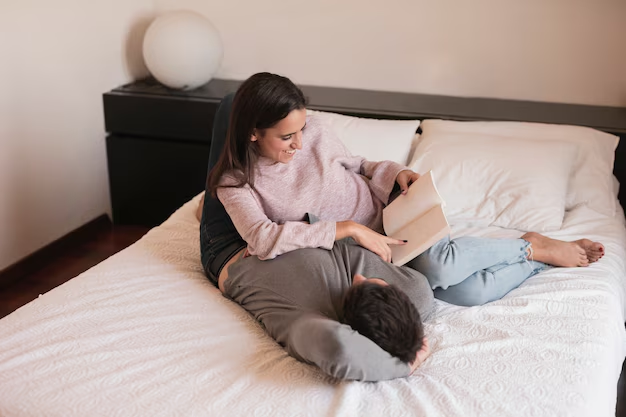
How To Choose a Mattress For Couples: Key Questions Answered
If you’re searching for “How To Choose a Mattress For Couples”, you’re usually trying to solve one main problem: how to get both people sleeping comfortably on the same bed. This FAQ-style guide walks through what matters most for couples and how to balance different sleep needs without confusion.
What makes a good mattress for couples?
A good mattress for couples does three main things:
- Keeps both partners comfortable (even with different firmness preferences)
- Reduces disturbance when one person moves or gets up
- Provides enough space and support for two bodies over time
When thinking about how to choose a mattress for couples, start with these shared priorities before focusing on specific materials or brands.
What size mattress is best for couples?
For two people, size is one of the most important decisions.
- Full (Double): Often feels cramped for most couples.
- Queen: Common starting point; works for many couples with average body sizes and no large pets.
- King: Offers more space to spread out, helpful if one or both partners move a lot.
- Split king or two-sided setups: Useful if partners want very different firmness levels.
In general, more space means fewer sleep disruptions. If your room and budget allow it, many couples find a larger size more comfortable long-term.
How do couples handle different firmness preferences?
Differing firmness preferences are one of the biggest challenges in how to choose a mattress for couples.
What firmness works for both of us?
There’s no single “best” firmness, but many couples compromise around a medium to medium-firm feel because it can:
- Support a range of body weights
- Suit multiple sleep positions
- Reduce the feeling of sinking too deeply or lying on a board
If one partner prefers soft and the other firm, possible approaches include:
- Choose a balanced middle ground (medium or medium-firm) that feels acceptable to both
- Use mattress toppers on one side to slightly soften or adjust feel
- Consider configurations with different firmness levels per side, if available
The key is to focus on support first (spine feeling neutral, not strained) and then comfort.
Which mattress types work well for couples?
Each common mattress type has trade-offs for couples.
Foam mattresses
Many couples like foam for its motion isolation. It tends to:
- Absorb movement, so partners feel less shaking
- Contour to each person’s body
However, some foams can feel warmer or too enveloping for people who like a more “on top of the bed” feel.
Hybrid mattresses
Hybrids combine coils with comfort layers (often foam). They tend to:
- Offer good support and a more responsive feel
- Provide better edge support than many all-foam options
- Still limit motion fairly well, depending on design
They can be a strong middle ground for couples with mixed preferences.
Innerspring-style mattresses
These use coil systems with thinner comfort layers. They usually:
- Feel bouncier and more traditional
- May transfer more motion than foam or some hybrids
- Often have solid edge support
Some couples enjoy the bounce, while others find motion transfer bothersome.
How important is motion isolation for couples?
Motion isolation is very important when deciding how to choose a mattress for couples, especially if:
- One partner is a light sleeper
- One partner changes positions often
- You go to bed and wake up at different times
Foam and many hybrids are often preferred for minimizing movement across the surface. If you or your partner often gets disturbed by shifting, prioritize motion isolation in your search.
What else should couples consider besides firmness and size?
Beyond size, type, and firmness, a few other features matter:
- Edge support: Strong edges make it easier to use the full surface without feeling like you’ll roll off, important if you share a smaller size.
- Temperature feel: If one or both partners sleep warm, look for designs that promote airflow or feel cooler at the surface.
- Noise: Quieter mattresses (often foam and some hybrids) are less likely to squeak or creak when someone moves.
- Durability: Two people place more total weight on the mattress, so stable support over time becomes more important.
How can couples test a mattress effectively?
When you can try a mattress in person, test it together:
- Lie on your usual sleep sides and positions
- Roll over and see how much the other person feels it
- Sit and lie near the edges to check stability
- Stay on it for several minutes, not just a quick sit
If you’re trying it at home, give your bodies time to adjust and pay attention to ongoing comfort, nighttime disturbances, and morning feel for both partners.
✅ Quick Mattress Takeaways
Key points about How To Choose a Mattress For Couples
- Prioritize shared needs first: Enough space, support, and low disturbance.
- Size matters: A queen works for many, but a king often feels more comfortable for two.
- Compromise on firmness: Medium to medium-firm often balances different preferences.
- Motion isolation is crucial: Especially if one partner is sensitive to movement.
- Consider type: Foam for motion control, hybrids for balance, innerspring-style for bounce.
- Check edges and noise: Strong edge support and low noise make sharing easier.
- Test together: Evaluate comfort, movement, and space as a pair, not individually.
When you understand how to choose a mattress for couples, the process becomes less about guessing and more about matching your shared habits and preferences to specific mattress features. Focusing on space, support, and reduced disturbance gives both partners a better chance at consistently restful sleep.