Does a Mattress Protector Stop Bed Bugs? What It Can (and Can’t) Do
If you’re wondering “Does a Mattress Protector Stop Bed Bugs?”, you’re likely trying to protect a new mattress or control a current problem. This FAQ-style guide explains exactly how mattress protectors fit into bed bug prevention and what you realistically can expect from them.
What’s the Difference Between a Mattress Protector and a Mattress Encasement?
Before answering “Does a Mattress Protector Stop Bed Bugs?” it helps to understand the two main types of covers:
Mattress protector:
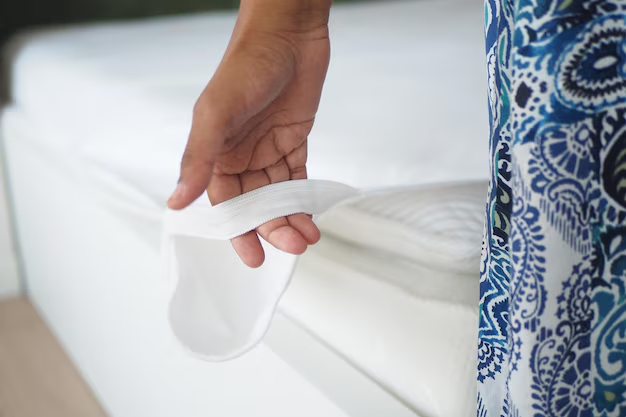
A removable cover (often waterproof) that usually fits like a fitted sheet. It primarily protects against spills, stains, sweat, and everyday wear.Mattress encasement:
A zippered, fully enclosed cover that surrounds the entire mattress on all sides, often with tight seams and special zipper designs to limit gaps.
Why this matters:
For bed bugs, a simple mattress protector offers limited help, while a full encasement is typically the product designed with bed bug control in mind.
So…Does a Mattress Protector Stop Bed Bugs?
On its own, a standard mattress protector usually does not stop bed bugs.
Here’s why:
- Bed bugs can live in many places: bed frames, headboards, baseboards, furniture, and tiny cracks—not just mattresses.
- A typical protector only covers the top and sides and may leave gaps at the corners, seams, or elastic edges.
- Bed bugs can still crawl onto the mattress surface, even if there is a protector on it.
However, some protectors are marketed with bed bug–related features, such as tighter weaves or additional barriers. These may help reduce hiding spots on the sleeping surface, but they still do not address all the other places bed bugs can live in a bedroom.
If your main concern is bed bugs, a full mattress encasement is usually more effective than a simple protector.
How Can a Mattress Encasement Help with Bed Bugs?
A properly designed mattress encasement can:
- Trap any existing bugs or eggs already in the mattress so they can’t easily get out.
- Remove seams and crevices on the mattress surface, giving bugs fewer places to hide.
- Make it easier to spot activity on the smooth, light-colored fabric.
Still, even a good encasement does not:
- Remove bugs from other parts of the bed or room
- Guarantee you will not get bed bugs
- Replace the need for a broader inspection or treatment plan if you suspect an infestation
What Features Should I Look For If Bed Bugs Are a Concern?
If you’re shopping in the “Mattress Buying & Selection” stage and worried about bed bugs, pay attention to the details on the label. Look for:
- Full encasement design (covers all sides, not just the top)
- Tight, small-weave fabric that bugs are less likely to squeeze through
- Reinforced or sealed zipper that closes completely with no obvious gaps
- Secure seams (double-stitched or reinforced) to reduce potential openings
- Easy-to-clean fabric so you can regularly inspect and wash the cover
These features are especially important if your main question is “Does a Mattress Protector Stop Bed Bugs?” because they determine how much realistic protection you get.
Common Follow-Up Questions
Can Bed Bugs Bite Through a Mattress Protector?
Bed bugs do not typically bite through most standard mattress materials or thick covers. Instead, they:
- Hide in nearby cracks and crevices
- Crawl onto exposed skin while you sleep
So the main issue isn’t them biting through the protector—it’s that they can go around it.
Do I Still Need a Protector If I Use an Encasement?
Many people choose to use both:
- The encasement stays on long-term to simplify inspection and reduce hiding spots.
- A removable protector goes on top to handle everyday spills, sweat, and comfort preferences.
This combination can help protect your investment while keeping the sleeping surface easier to clean.
Will a Mattress Protector Prevent Bed Bugs from Spreading?
No. A regular mattress protector:
- Does not stop bed bugs from moving between furniture or rooms
- Does not treat an active infestation
It’s better to think of protectors and encasements as support tools, not complete solutions.
✅ Quick Mattress Takeaways
Key points consumers should understand about “Does a Mattress Protector Stop Bed Bugs”
- A simple mattress protector alone usually does not stop bed bugs.
- Full mattress encasements offer more useful protection for bed bug concerns than basic protectors.
- Bed bugs can live in many places besides the mattress, so no cover solves the whole problem.
- Look for full-zip encasements, tight fabric weave, and sealed zippers if bed bugs are a priority.
- Using both an encasement and a removable protector can help protect your mattress and make inspection easier.
- Mattress protectors and encasements are preventive and supportive tools, not stand-alone treatments for infestations.
Choosing the right cover becomes easier once you understand what it can realistically do. When asking “Does a Mattress Protector Stop Bed Bugs?”, the most accurate answer is: it helps protect your mattress, but true bed bug control requires more than a simple protector.