Do You Need a Mattress Topper? How to Tell If It’s Right for You
If you’re wondering “Do You Need a Mattress Topper?”, you’re likely feeling something isn’t quite right with your current bed—too firm, too soft, too hot, or just not comfortable enough. This guide walks through what a topper does, when it helps, and when it’s not the answer.
What Is a Mattress Topper, and What Does It Actually Do?
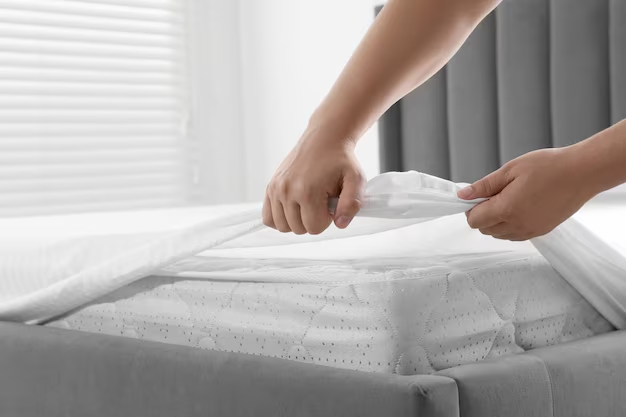
A mattress topper is a separate comfort layer that sits on top of your existing mattress, usually held in place by the sheet. It’s thicker than a mattress pad and is designed mainly to change how your bed feels.
Common purposes include:
- Adding cushioning to a mattress that feels too firm
- Slightly firming up a mattress that feels too soft (depending on material)
- Smoothing minor surface issues like light impressions or uneven feel
- Changing the sleep surface feel (more contouring, bouncier, cooler, etc.)
A topper does not repair a severely worn-out or sagging mattress. It works best when the base mattress is still in reasonably good condition.
Do You Need a Mattress Topper? Key Signs to Look For
You might be asking “Do You Need a Mattress Topper?” if you notice any of these common situations:
1. Your Mattress Feels Too Firm
If your mattress feels hard or unyielding, a softer topper can add pressure relief and a more cushioned feel. Many sleepers choose foam or plush fiber toppers for this reason.
2. Your Mattress Feels a Bit Too Soft (But Not Collapsing)
If your mattress is just slightly too soft, a denser or firmer topper may give a bit more support and reduce that “sinking in” sensation. However, if your mattress is deeply sagging, a topper usually cannot correct this.
3. You Want to Change the Feel Without Buying a New Mattress
A topper can be useful if:
- You’re not ready to replace your mattress yet
- You share a bed and need a different feel than your partner prefers
- You moved, and your bed feels different in a new environment
In these cases, a topper acts as a temporary or adjustable comfort upgrade.
4. Your Mattress Is in Good Shape, but Just Not Comfortable
If your mattress is still structurally sound (no deep dips, no broken springs) yet it doesn’t feel pleasant to sleep on, a topper can fine-tune comfort without changing the core support system.
When a Mattress Topper Probably Won’t Help
A natural part of answering “Do You Need a Mattress Topper?” is knowing when the answer is actually no.
You likely do not need (or won’t benefit much from) a topper if:
Your mattress is more than mildly sagging
- Deep body impressions, visible dips, or tilted areas usually indicate the support layers are worn out.
You feel bumps, broken coils, or sharp transitions
- A topper can mask this slightly but generally can’t fix underlying structural issues.
You’re consistently uncomfortable no matter what position you try
- In this case, the entire mattress construction may not be right for you.
In these situations, a new mattress is often more effective than adding layers on top of a failing one.
What Types of Mattress Toppers Are There?
If you’ve decided you might need a topper, knowing the common options can help narrow down what suits you.
Common Topper Materials
Memory foam:
Contouring, slower response, often preferred by sleepers who like a “hugged” feel.Latex foam:
More responsive and bouncy, with a somewhat lifted feeling rather than deep sink.Fiber or down-alternative:
Fluffy and soft, often used for a pillow-top style feel.Foam blends or egg-crate foam:
Can offer basic cushioning and a lighter feel, often at a lower cost.
Each material has a different feel. The “best” one depends on your comfort preferences rather than a universal rule.
How Thick Should a Mattress Topper Be?
Thickness affects how much the topper changes your bed’s feel:
1–2 inches:
Mild adjustment; good if your mattress is close to comfortable already.2–3 inches:
Noticeable change in softness or contouring; a common middle-ground choice.3–4 inches:
Significant change; may be helpful if your mattress is clearly too firm but still supportive.
A very thick topper won’t fix severe sagging, but it can dramatically change the comfort of a firm, supportive mattress.
How Do You Know If a Topper Is Right for Your Mattress?
Before deciding if you need a mattress topper, consider:
Overall condition of your mattress
- Is it flat and supportive, or visibly worn and uneven?
Your primary discomfort
- Too firm? A softer topper may help.
- Slightly too soft? A firmer topper might provide balance.
- Deep sagging or structural problems? Toppers rarely solve this.
Your sleep position
- Side sleepers often like more cushioning for shoulders and hips.
- Back and stomach sleepers usually prefer a more balanced or slightly firmer feel to avoid sinking too deeply.
✔️ Quick Mattress Takeaways
Key points to understand about “Do You Need a Mattress Topper”
- A topper adjusts comfort, not core support. It works best on a mattress that’s still in decent shape.
- You may benefit from a topper if your mattress feels too firm, slightly too soft, or just not quite right, but isn’t sagging or broken.
- You probably don’t need a topper if your mattress has deep dips, broken components, or long-term structural issues—these usually call for a replacement instead.
- Material and thickness matter. Foam, latex, and fiber toppers all feel different, and thickness affects how dramatic the change will be.
- Your personal comfort preferences guide the choice. There is no single “best” topper—only what feels right on your existing mattress and for your sleeping style.
If you’re asking “Do You Need a Mattress Topper?”, the answer depends mainly on your current mattress condition and how far off your comfort level feels. When the base mattress is still supportive, a topper can be a practical way to fine-tune firmness, cushioning, and overall feel so your bed better matches the way you like to sleep.