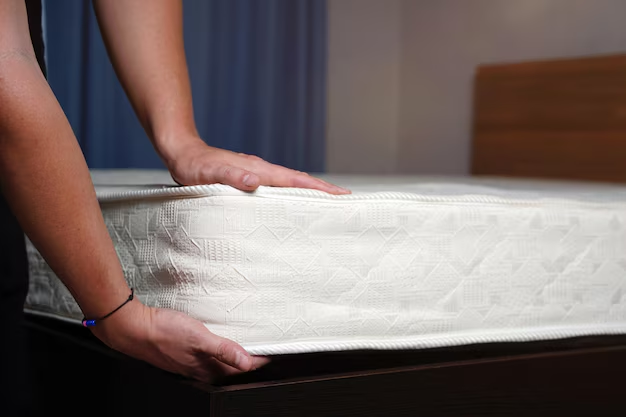
Can a Mattress Topper Help With Back Pain? What to Know Before You Buy
If you’re wondering “Can a Mattress Topper Help With Back Pain?”, you’re likely dealing with discomfort on your current bed and hoping a simpler, more affordable solution might help. This FAQ-style guide explains what toppers can and cannot do, and how to choose one that better supports your back.
What Is a Mattress Topper, and How Can It Affect Back Comfort?
A mattress topper is a separate layer that sits on top of your existing mattress to change how it feels. Common materials include memory foam, latex, down alternatives, and polyfoam.
When people ask “Can a Mattress Topper Help With Back Pain?”, they usually want to know if:
- A topper can make a too-firm mattress softer
- A saggy or uncomfortable mattress can be “fixed”
- A topper can improve alignment enough to reduce discomfort
A topper can change the surface feel of your bed: making it softer, more cushioned, or more pressure-relieving. For some sleepers, this can lead to more comfortable spinal alignment and less strain on sensitive areas like the lower back or shoulders.
However, a topper cannot rebuild or replace a worn-out, deeply sagging mattress. It works best when the underlying mattress is still basically supportive.
Can a Mattress Topper Help With Back Pain in Real-Life Situations?
When can a topper be helpful?
A mattress topper may be helpful if:
- Your mattress is too firm, and you feel pressure in your shoulders, hips, or lower back
- Your mattress is new but feels uncomfortably hard, and you want a bit more cushioning
- You sleep better with a more contouring surface that “cradles” your body
- You share a bed and want to fine-tune comfort without replacing the entire mattress
In these situations, a topper can improve comfort and reduce pressure points, which some people notice as less morning stiffness or fewer aches.
When is a topper unlikely to help?
A topper is less likely to help if:
- Your mattress has deep sags, lumps, or broken springs
- You can feel clear dips where you usually lie
- The mattress is very old and no longer supportive
In those cases, a topper often just follows the sag and cannot restore proper support.
What Type of Mattress Topper Is Best for Back Discomfort?
Different materials feel and perform differently. Here’s a simple comparison:
| Topper Type | General Feel | Often Chosen For… |
|---|---|---|
| Memory foam | Contouring, slow response | Pressure relief, “hugged” feeling |
| Latex | Bouncy, responsive, supportive | Support with some cushioning |
| Polyfoam | Softer to medium, varies by density | Budget-friendly comfort adjustment |
| Fiber/down alt. | Fluffy, plush, less supportive | Extra softness on a firm mattress |
For many people with back sensitivity, support plus gentle cushioning is more helpful than extreme softness. Very plush fiber toppers can feel cozy but may not offer much structure for alignment.
What Firmness and Thickness Should I Choose?
Firmness: soft vs. medium vs. firm
- If your mattress feels too hard, a medium or medium-soft topper can add enough give to let your shoulders and hips sink in slightly.
- If your mattress is already soft, a very plush topper may let you sink in too far, which some people find contributes to discomfort.
Many sleepers with back sensitivities prefer a topper that feels supportive but not rigid—often in the medium range.
Thickness: 2 inches vs. 3+ inches
- 2-inch toppers: Subtle change; good if you want just a bit more cushioning.
- 3–4 inch toppers: More noticeable change; can significantly soften a firm mattress and increase contouring.
If your main question is “Can a Mattress Topper Help With Back Pain?”, and your current mattress feels quite firm, a 3-inch medium topper is a common choice for adding both comfort and contouring.
How Does Sleeping Position Affect Which Topper Works Best?
Your sleeping position influences how your spine lines up on a topper.
- Back sleepers: Often do well with medium toppers that let the hips sink slightly while keeping the mid-back supported.
- Side sleepers: Often appreciate medium to medium-soft toppers that cushion shoulders and hips to reduce pressure.
- Stomach sleepers: Usually need a firmer, thinner topper (or none) to avoid the midsection sinking too deeply.
Your body weight also matters: lighter sleepers may prefer softer toppers to feel any contouring, while heavier sleepers may find very soft toppers bottom out.
Are Mattress Toppers a Long-Term Solution for Back Issues?
A topper can be a useful adjustment tool, especially if:
- You’re not ready to replace your mattress
- Your mattress is in decent shape but feels uncomfortable
- You want to experiment with feel before committing to a new bed
However, a topper is usually a short- to medium-term comfort upgrade, not a complete fix for a structurally unsupportive mattress. If the base mattress no longer supports your body evenly, even the best topper has limits.
For persistent or severe back pain, it’s also important to consult a qualified health professional who can consider your overall situation, not just your mattress.
✔️ Quick Mattress Takeaways
Key points consumers should understand about “Can a Mattress Topper Help With Back Pain”
- A topper can help with back discomfort when the mattress is too firm or slightly uncomfortable but still basically supportive.
- It is not a cure-all and usually can’t fix a heavily sagging, worn-out, or damaged mattress.
- Material matters: memory foam and latex are often chosen for combining support with contouring; very plush fiber toppers may lack structure.
- Choose firmness carefully: many sleepers with back sensitivities prefer a medium feel—supportive with gentle cushioning.
- Thickness changes impact: 3-inch toppers generally create a more noticeable comfort change than thinner options.
- Sleeping position and body weight affect what works best; there is no single “best” topper for everyone.
- For ongoing or significant back pain, professional medical guidance is important, with the topper viewed as one comfort factor among many.
Understanding these points can help you decide whether a topper is likely to make your bed more comfortable and better suited to your back.